
Triton Bay
Triton Bay
vibrant coral gardens and whale shark encounters in the remote West Papua
Triton Bay in West Papua is a truly spectacular and secluded dive location, boasting an unspoiled underwater environment and some of the most singular and scenic coral reef landscapes. Very few divers have explored this secluded region of Indonesia, which can be reached only by liveaboard and, more recently, from the new Triton Bay Divers Resort. You can also liveaboard dive in the famous Raja Ampat and take the rare chance to explore Triton Bay and Kaimana: Indonesia’s last frontier for scuba diving.


KAIMANA MARINE PROTECTED AREA
Located in the province of Kaimana, Triton Bay is a diving hotspot discovered after Conservation International’s biodiversity surveys in 2006, which identified the highest reef fish biomasses of anywhere previously surveyed in SE Asia, averaging 228 tons/km².
Probably taking advantage of this abundance, a unique resident population of Bryde’s whales (Balaenoptera brydei) was also discovered in the area, as well as a breeding area for hammerhead sharks (Sphyrna lewini) in Triton Bay.
Recognizing the need to conserve the biodiversity of the coastal area, Indonesian authorities established the 597,747-hectare Kaimana Marine Protected Area in November 2008, which is surprisingly rich in marine biodiversity for its size.
Currently, scientists continue to break world records, as both Triton Bay and the nearby Fak Fak are still relatively unexplored. There is a continuous discovery of new species and new dive sites during cruises to this region of the Papuan Bird’s Head Seascape.
SCUBA DIVING IN TRITON BAY
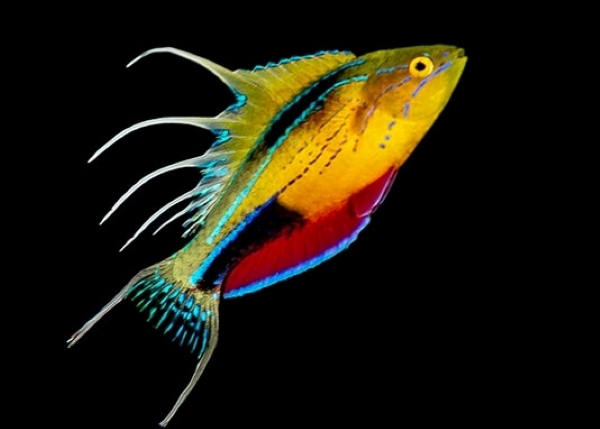
Many of the reef fish in Kaimana are endemic species, meaning that they can only be found in this region of West Papua. Among these are a small Epaulette shark (Hemiscyllium henryi), known for ‘walking’ on its fins, and the vividly colored Nursalim flasher wrasse (Paracheilinus nursalim), which flashes and extends its fins to defend its harem from other aggressive males.
Triton Bay, while often celebrated for wide-angle coral reefs, also provides an interesting macro photography experience for those focused on small, rare, and fascinating marine life. Like many kinds of pygmy seahorses: H. bargibanti, H. denise, H. pontohi, and H. servensi.
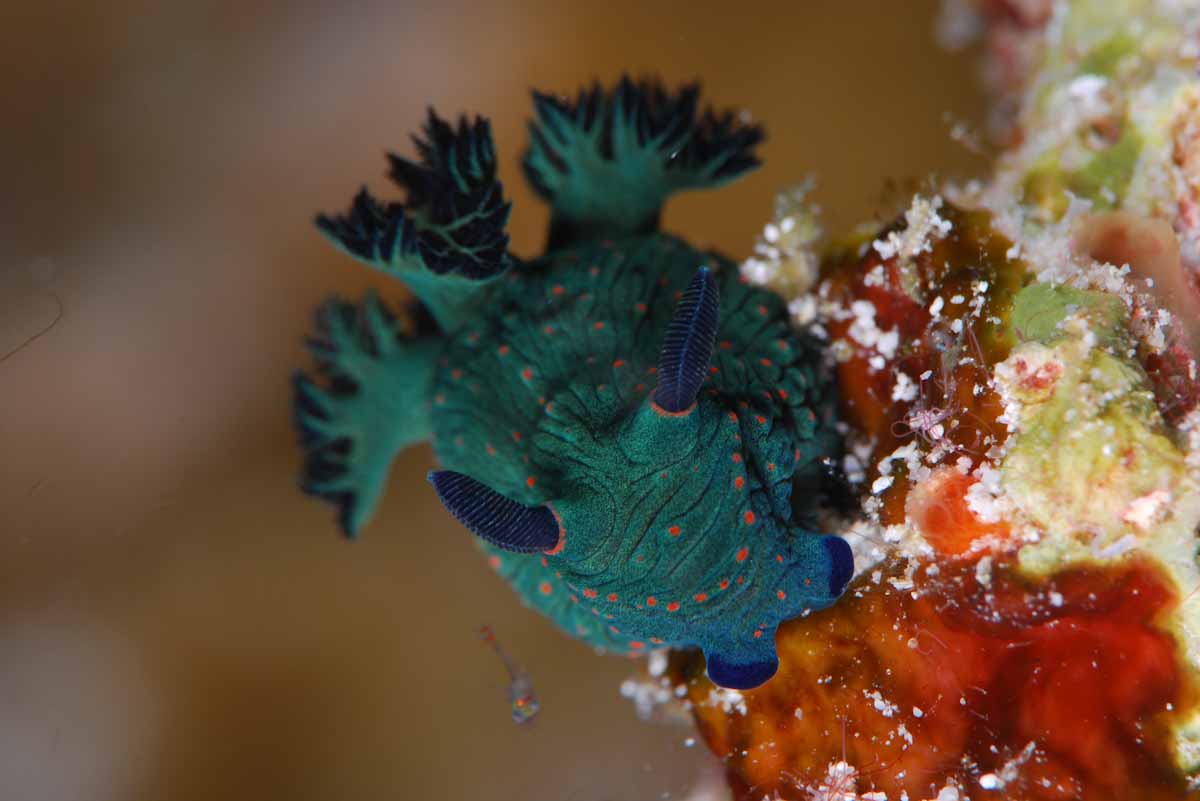
Extraordinary numbers of hard corals (stony reef-building corals), mollusks (clams and snails), and invertebrates (sea slugs and nudibranchs).

Massive school of fish, including fusiliers and sweetlips. Various colorful species of reef fish, as well as their predators: snappers, groupers, napoleons, barracudas, jacks, and eagle rays. Among these, the Wobbegong, a bottom-dwelling shark, is considered a master of camouflage and ambush; it uses extreme camouflage to blend in with coral reefs and rocky seabeds, allowing them to capture unsuspecting prey.
While the nutrient-rich water supports incredible marine life and coral growth, it can sometimes result in lower visibility compared to other areas of Indonesia. The lens choice is very important: a 100mm or 105mm macro lens for critters, and a 60mm lens for larger subjects. And of course, strong and versatile strobes are essential for lighting potential dark areas.
DIVE SITES

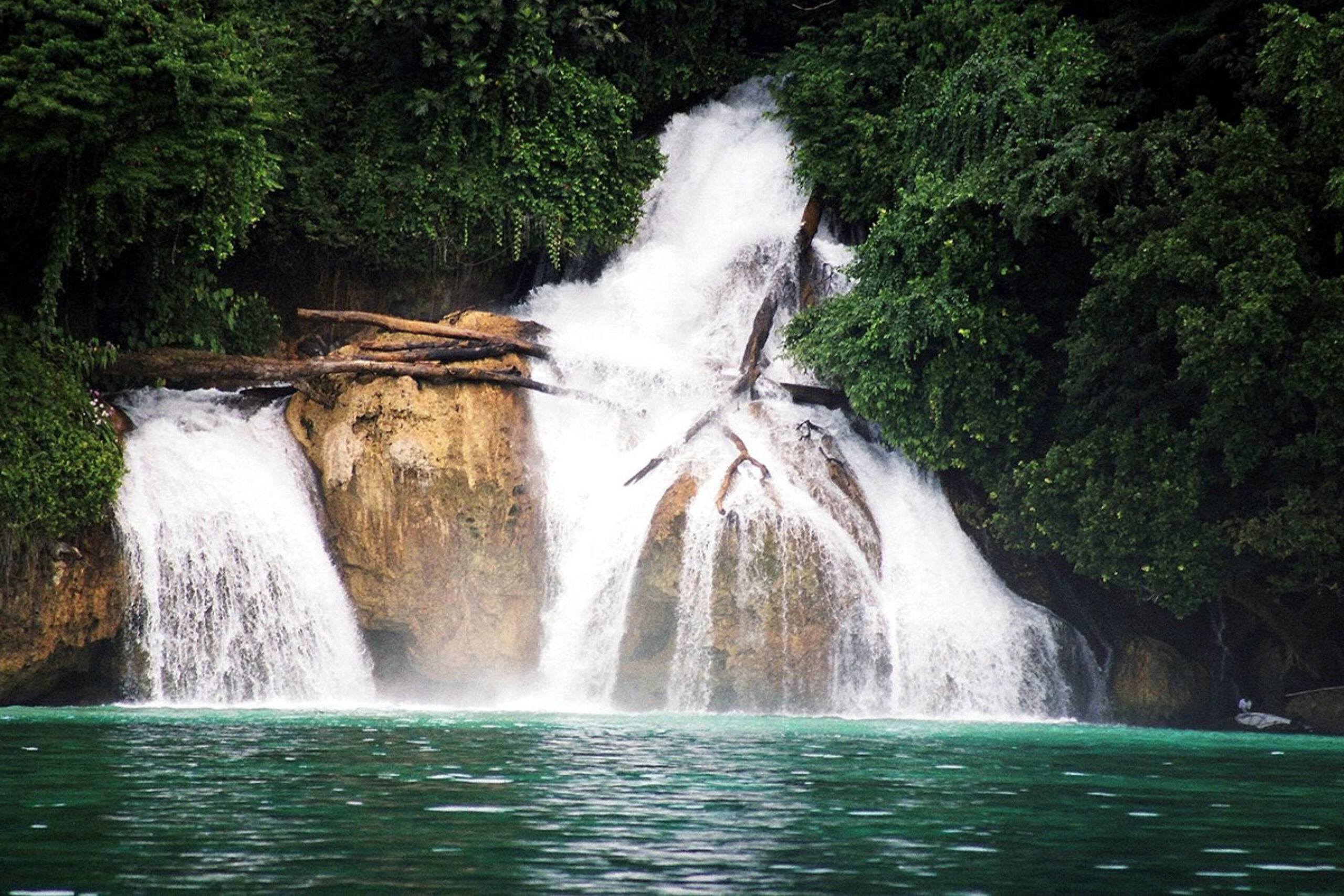
As we travel from Palau Aiduma to Palau Pisang, we can visit a signature feature of the Fak Fak coastline. North of Momon Bay, a spectacular waterfall flows from rainforest hills directly into the sea, framed by lush mountain slopes. Calm, clear lagoons near the waterfall are perfect for swimming, and you can enjoy a refreshing shower beneath the falls.
The area around Aiduma Island is home to some of the most unspoiled diving left on earth. Dense black coral gardens, lush soft corals in all colors of the rainbow, and multi-hued sponges, including vase, tube, barrel, and more, abound. Among these, a staggering variety of bony fishes and invertebrates frolic in the nutrient-rich water.
Flights of cownose rays appear seasonally. Grouper, batfish, damselfish, and morays swim with fusilier, surgeonfish, and scorpionfish. Clouds of batfish swirl. Every kind of pygmy seahorse, nudibranchs, several species of ghost pipefish, frogfish, and more hide out on the bottom.
The large boulders that lie around Saurenus, some as shallow as ten feet of water, are literally covered completely by wildly varying shades of soft corals. Colorful crinoids cling to any available surface, fighting for space with sea fans and cup corals. This is the most amazing and overwhelming coral-fish environment ever encountered underwater.
Although Triton Bay is not known for muck diving, it is possible to find macro species in Namatote Wall: rare shrimps, crabs, nudibranchs, and gobies. We can regularly find some critters, such as devil scorpionfish, wunderpus, frogfish, leaf fish, and ornate ghost pipefish. In places like Batu Cave and Little Komodo, giant groupers are hiding under the rocks. In Little Komodo and 7th Heaven, everything can be experienced. If Komodo is a sum up of diving in Indonesia, Little Komodo has it all in just one dive.
In recent years, the demand to visit this region of Indonesia has increased the number of liveaboards that visit Triton Bay; all the itineraries include exploratory diving, which allows the discovery of new dive points, such as the actual whale shark site, which is another of the main attractions of diving in Triton Bay. However, the cruise to Triton Bay is not on the regular schedule of all liveaboards, so it is advisable to book a year in advance.
Diving with whale sharks in Triton Bay
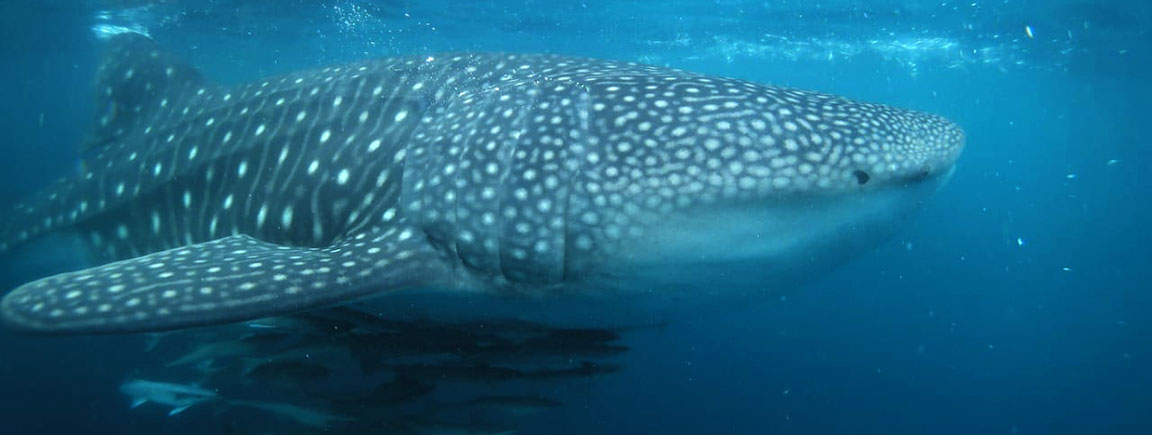
The actual whale shark site is always in the liveaoard itineraries. And one or more dive trips to the whale shark site is included in your dive package at Triton Bay Divers Resort
DIVING SEASON
- Diving season: Best period from October to April. During the rest of the year the wind can make navigation difficult
- Rainy season: From December to March, but being subequatorial area, there is no real dry season, the rains occur all year round in the form of rain showers
- Water temperature: 27-30°C
- Visibility: Can be as low with averages about 5m with a maximum of 10-20m due the incredibly nutrient-rich water
- Depths: 5 – >40m
- Currents: Moderate
- Surface conditions: Calm
- Diver level experience: All levels
- Dive sites: Unknown, at the present >30
- Length of stay: On a liveaboard, a 11-16 day itinerary is recommended, during a trip to with either a Raja Ampat or Banda sea dive cruise. In resort, 7-10 days at Triton Bay Divers Resort, the only existing structure
HOW TO GET THERE
- Airport: Kaimana. But it will depend on the itinerary of your liveaboard. Other departure and arrival ports of these cruises are: Sorong, Ambon, Saumlaki. In all cases, the towns where the ports of embarkation and disembarkation are located are connected with domestic flights from Jakarta or Bali, which can be reached with international flights
- Weather: 27-35°C. Subequatorial zone with punctual showers of rain or thunderstorms in the afternoon or evening, and sunny days and blue skies
- Time zone: West Papua GMT +9
- Transit night & connecting flight: You may need to spend one night in transit in Indonesia before and/or after your cruise, depending on your domestic and international flight schedules
We have the most competitive airfares with the most convenient flight timetables, and hotels for all budgets. Does it seem complicated? Contact an operator who speaks your language and who can assist you in Indonesia. Feel free to contact us now!
RESORTS
Triton Bay Divers Resort
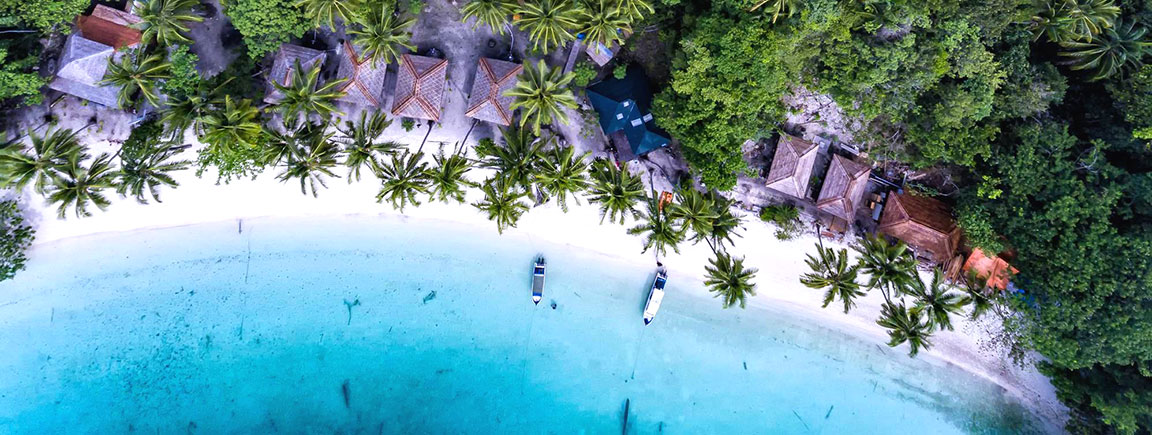
This the only existing dive resort in the region: Triton Bay Divers
LUXURY CRUISES & CHARTERS
Dive cruises in Triton Bay depart or arrive in some cases from other regions of Indonesia, combining two coveted destinations in a single trip. These are dream trips that couple Triton Bay with the Banda Sea or Raja Ampat. Charter now a full boat or full resort in Triton Bay.


